
Written by: Toriana Grooms
I didn’t like Ponyo.
I feel like this sentence is confessing to a crime—and to many, it probably is. Considering the movie’s large fanbase and overwhelming positive reviews, I was shocked when I finished the movie feeling as if there was something I missed.
This technically isn’t the first time I’ve watched the movie, though I wouldn’t call this a “rewatch.” I first watched Ponyo at ten during a too-long car ride for a swimming event. I was carpooling with another family, and the youngest son pulled out his iPad and showed me a world of bright colors and gorgeous animation. However, due to the movie’s run-time, I never got past the halfway point.
Fast-forward to nearly a decade later, and I’m winding down from my high from The Boy and the Heron, reliving the nostalgia of my ten-year-old days. Not even a few months later, I dragged my mom into the living room, insisting we rent Ponyo because it was the movie. My mom has never seen any Studio Ghibli films, but we loved animated movies, and a well-rated, beautifully designed family movie seemed like a match made in heaven. So, when the movie ended, and the colorful hand-drawn credits rolled in, I turned to my mother and saw the same distinctive expression reflected back at me:
“Huh? This is what you made me watch?”
“Huh? This is what I made you watch?”
There’s a reason I said I DIDN’T like Ponyo. During the first 15 minutes after the movie, I really didn’t get it. I love happy endings and films about children navigating the world, but the idea of the solution to everything being “true” love between five-year-olds, regardless of the deep-rooted family issues held by both Sōsuke and Ponyo felt lackluster.
I understand the kids are young, but I wish there was more resolution when it came to the family dynamics, especially Ponyo’s apparent “hatred” for her father. However, perhaps the complexities of these relationships were purposely avoided to capture the simplicity of childhood.
This sentiment about simplicity and innocence was reiterated to me after scrolling Reddit during the end credits, thinking: Is there something I’m missing? Something we’re missing? There’s an overlooked light-heartedness to a stress-free movie about a powerful mermaid-like baby and an ending that seems too good to be true.
Sure, some parts don’t make sense or feel overly complex for a kid’s movie. But maybe adult life is too complex and cynical, and not everything should be viewed through that lens. The movie wasn’t designed to address complex relationships and give viewers a sense of “closure” in terms of parental abstinence and parent-child communication because this isn’t the type of conflict-resolution that children of this age would experience. Ponyo frustrated me with its loose ends and what-ifs, but maybe that’s because I wasn’t appreciating it for what it was. And if those changes were made, maybe Ponyo wouldn’t be what it is.
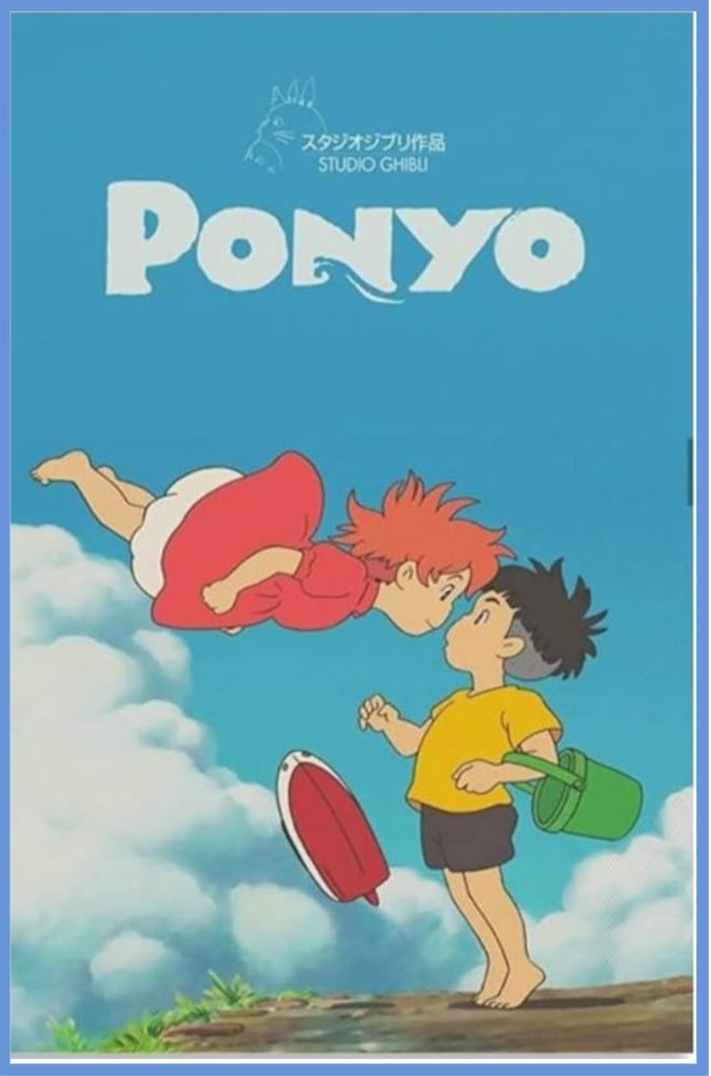
Featured Image Caption: The movie poster for the Ghibli film, Ponyo.
