
Written by: Kaitlin Anderson
Despite being a diehard fan of Ghibli movies, I often struggle to describe how they make me feel. Many of them have required multiple watch-throughs just to take everything in. It’s easy to get swept away by the animation and music while losing track of the plot’s finer details—almost like getting lost on a hike but not feeling too disappointed about it because the view is so nice. The Boy and the Heron and its surreal dream logic is no exception.
I was ecstatic when Hayao Miyazaki’s (alleged) final movie was released in December of 2023, right in the middle of my senior year of high school. The film features a gorgeous musical score composed by Joe Hisaishi and English voicework by many notable actors (Robert Pattinson, Christian Bale, Florence Pugh, and Mark Hamill, to name a few). However, it was the film’s depiction of growing up that left the biggest impression on me.
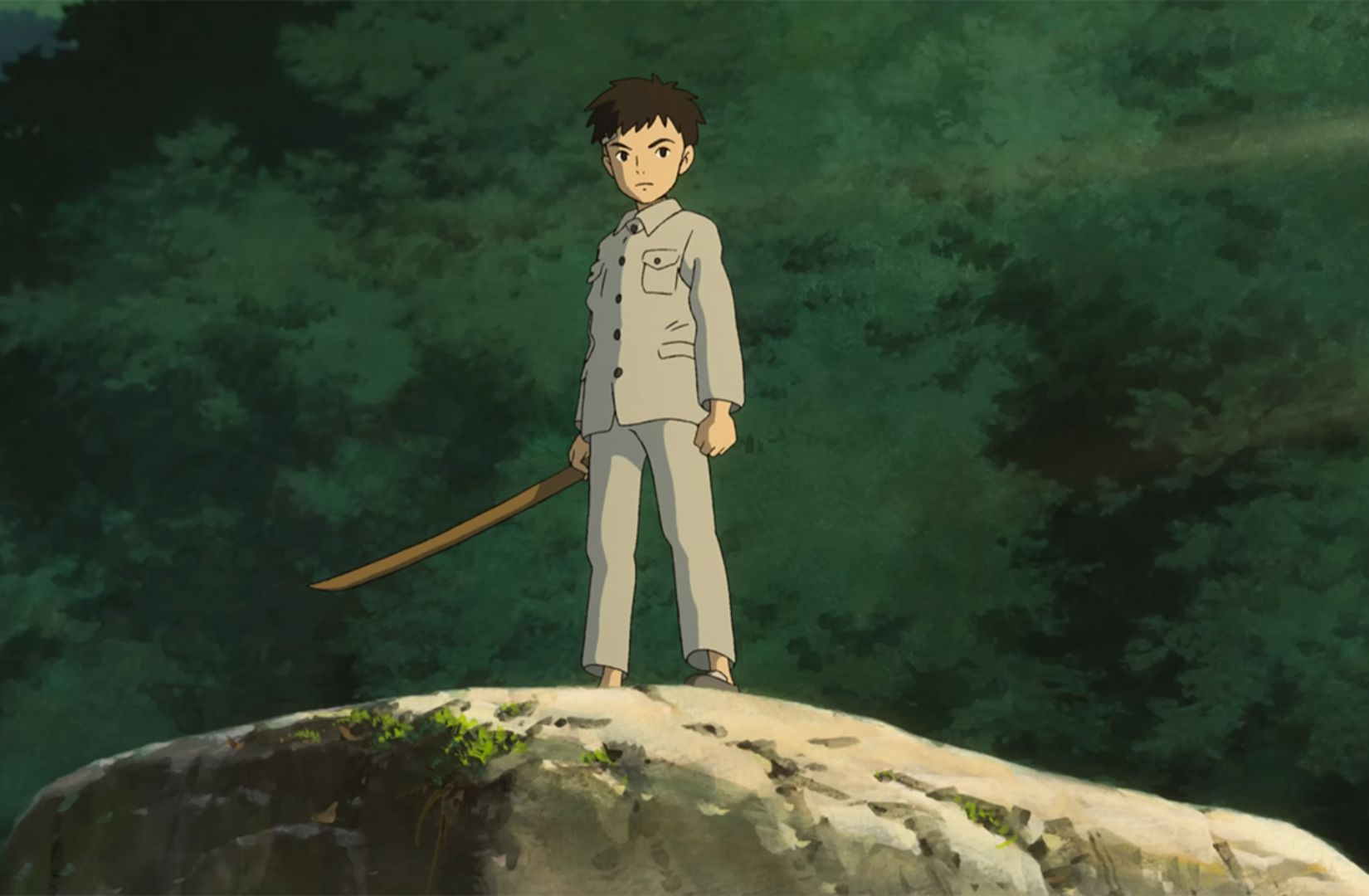
The semi-autobiographical story draws from Miyazaki’s own childhood. It follows Mahito, a young boy traumatized by his mother’s death in a hospital fire during WWII. He moves to the countryside with his father and new stepmother, Natsuko, who also happens to be his mother’s younger sister. While Mahito struggles to accept his stepmother and adapt to his new life, a grey heron guides him to a mysterious tower that sends him to another world: an island in a seemingly infinite sea, brimming with captivating scenery, unusual characters, and a lot of anthropomorphic birds.
If you’re anything like me, then you also often find a part of yourself wishing that characters could remain in beautiful fantasies instead of returning to real life at the end of the story. The setting in The Boy and the Heron is flawed but picturesque, and offers a magical escape from the troubles of reality. Mahito is offered a chance to not only stay in the tower’s world, but to take control of it and mold it to perfection. However, he declines the offer, having accepted over the course of his journey that suffering is an inevitable part of life—but not something that makes life not worth living.
Witnessing Mahito’s transformation and acceptance when I was anxiously awaiting college was extremely moving. Even now that I have made it to college, there is a lot I still fear about growing up. It’s probably why I enjoy Ghibli movies so much. They provide an escape from reality and create comfort through feelings of nostalgia and childlike joy. Even more comforting are the films’ depictions of transitions in life as something beautiful and necessary. Watching characters like Mahito face grief, misfortune, and uncertain futures and still keep moving forward is inspiring in a way I still can’t find the words for.
The story of a child venturing through a magical world and navigating the bittersweet changes they are faced with while growing up is reminiscent of Spirited Away, another one of my favorite works from Miyazaki. In many ways, The Boy and the Heron feels like a more mature version of the 2002 film, and not just because of its higher age rating. Its tackling of more complicated themes encourages older children—and “adults” who will perhaps always feel like children—to keep living our lives to the fullest.
I think Ghibli movies like these will always be comforting stories to fall back on when life gets difficult. It is rumored that Miyazaki has once again escaped retirement to work on yet another project, but if The Boy and the Heron is truly his final film, I can think of no better way to compound the messages of all his deeply moving works.
Featured Image Caption: Mahito, the protagonist of The Boy and the Heron.
