
Written by: Elijah Polance
Last summer, I sought to end a reading slump by returning to Gabriel García Márquez’s One Hundred Years of Solitude. On this second read, I found myself instantly enraptured by the stunning language and magical setting of Macondo, just as moved as when I first dove into the novel.
The reread proved to me that the strongest allure is the characters. The Buendía family tree, filled with repeated names and mixing connections, starts as an intimidating barrier to entry, one quickly circumvented by the novel’s compelling opening sentence. But it’s the unique solitude of each member of the Buendía family, whose rise and fall is so craftily explored, that cements Márquez’s masterpiece as one of my favorite novels.

That isn’t to say the characters are perfect. Many are deeply flawed and act disagreeably, so much so that it can be hard to appreciate them in their redeemable moments. And that’s part of what makes the book so great. After thinking over the novel and what it means to me, I put together this list of the characters that stuck with me most after my two reads. If you haven’t read or finished the book already and want to, be warned: there are plenty of spoilers ahead.
Melquíades
Melquíades is the only character on this list who isn’t part of the Buendía family. He’s a mysterious wanderer who visits the town of Macondo soon after the village was founded. He arrives with a caravan that presents the inhabitants with “miracles” like flying carpets, magnets, and ice.
Melquíades fades in and out of the storyline, appearing sporadically with the caravan before supposedly dying. Eventually, he returns after coming back from the dead. Even when he dies in the village, he continues appearing in the Buendía family’s house, though only a few characters can actually see him.
Something about Melquíades’ presence radiates wonder. You never know when he might bring out an invention, and when he does, it could be genuine magic or something commonplace, like a magnifying glass. Despite him sticking around so long, you’ll never feel like you figured him out.
Rebeca Buendía
Rebeca enters One Hundred Years of Solitude as a young girl from a distant village who is quickly adopted by the Buendía family. She appears sweet enough, except for a couple of oddities: an addiction to eating dirt and debilitating insomnia.
Eventually she settles in, engaging in sibling feuds with her sister to win a man over, only to break his heart and marry one of her brothers instead. It’s a callous act that drives the heartbroken man to suicide, but it’s Rebeca’s state afterward that’s most compelling.
When her husband dies, Rebeca becomes a hermit shrouded in black and secluded in her house. The few times a character visits, you see her wasting away even further. It’s sorrowful, but her departure from who she was before and confidence in her desolate fate works as a tragic, admirable redemption. Her mourning, while technically selfish, is driven by grief and love. When Rebeca was motivated by these same principles in the past, it hurt those around her. Now, it’s only herself facing the consequences, and it’s impossible not to feel for her as she becomes more relic than human, forgotten by almost all in Macondo.
Aureliano (Babilonia)
Aureliano, the son born from Renata Remedios and Maurico Babilonia’s tragic relationship, is one of the last additions to the Buendía family. Locked away by his grandmother, who never wanted him to exist, he rarely even interacts with his own family, much less the outside world. One of his only companions is the ghost of Melquíades, who guides him toward deciphering scrolls left by the wanderer that none of Aureliano’s ancestors could solve before.
Between Aureliano’s complete solitude and his inclination toward reading, he becomes quite the sympathetic character. Regardless of what happens in Macondo or the Buendía home, he’s always removed and in his own world. Unfortunately, this isn’t always the case. The unknowingly incestuous relationship that temporarily removes Aureliano from his solitude toward the novel’s end is a major detractor that must be mentioned.
But his pristine innocence before the fated relationship that seals the Buendía family’s fate is still something to cherish. You cheer for him every time he leaves the house, a rare occurrence. And you pity him when he’s the last one living on the premises, alone in a ghostly house that used to boom lively.
Úrsula Iguarán
Úrsula, the least problematic member of the Buendía family who reaches well over 100 years of age, faces the nonsense of almost every single generation of Buendías born after her. She was one of Macondo’s original founders, along with her husband, José Arcadio Buendía.
A lot of the time, Úrsula feels like the only character trying to keep the family together. But it’s an impossible task that leaves her constantly withstanding, adapting to, and correcting the mistakes of her relatives, especially the males. While she makes some headway in the family’s earlier days, she eventually becomes a bit of a nuisance for the other characters as her body and senses deteriorate.
Once Úrsula reaches her advanced age, a lot of what she says and thinks boils down to nostalgia, recalling people and events no one remembers except the reader. It’s her death, and the end of the original thread line connecting to Macondo’s beginnings, that hits the hardest in the story.
Colonel Aureliano Buendía
I fell in love with Colonel Aureliano Buendía after the first line of the novel, which reads, “Many years later, as he faced the firing squad, Colonel Aureliano Buendía was to remember that distant afternoon when his father took him to discover ice.” That’s all it took.
Colonel Aureliano Buendía, who spends his youthful days as a shy and curious boy with a penchant for silversmithing, ends up doing quite a lot. Most notably, he wages a series of wars against the Columbian government. While he initially fought because of political passion, his motivation eventually shifted to a bid for power out of pride.
What I care for most is his demeanor and life after the war. He retreats to his workshop in the Buendía home and creates small gold fishes, only to melt them down and begin again. That’s all he does for the rest of his life. It’s a remnant of his days well before the war: still interested in smithing with a single-minded intensity, yet without any of the passion or curiosity that motivated him before. He gets urged by others to recommit to war and recognition from strangers who see him as a legend, but he has none of it.
The Buendía family as a whole, and many of its members, are dominated by cycles, but few feel as overt and saddening as the colonel’s. But I’d argue it’s not all bad — his newfound simplicity and humility, while stemmed from apathy, are significant strides forward from his warring persona. Never does Macondo feel as peaceful as when Colonel Aureliano Buendía’s in his workshop, crafting his fishes, trapped in his eternal solitude.
So, there are some of my favorite characters met along the amazing literary journey that is Gabriel García Márquez’s One Hundred Years of Solitude. Sure, these characters might have some issues that make it hard to get behind them, but it only makes their commendable qualities and distinct solitude shine even more.
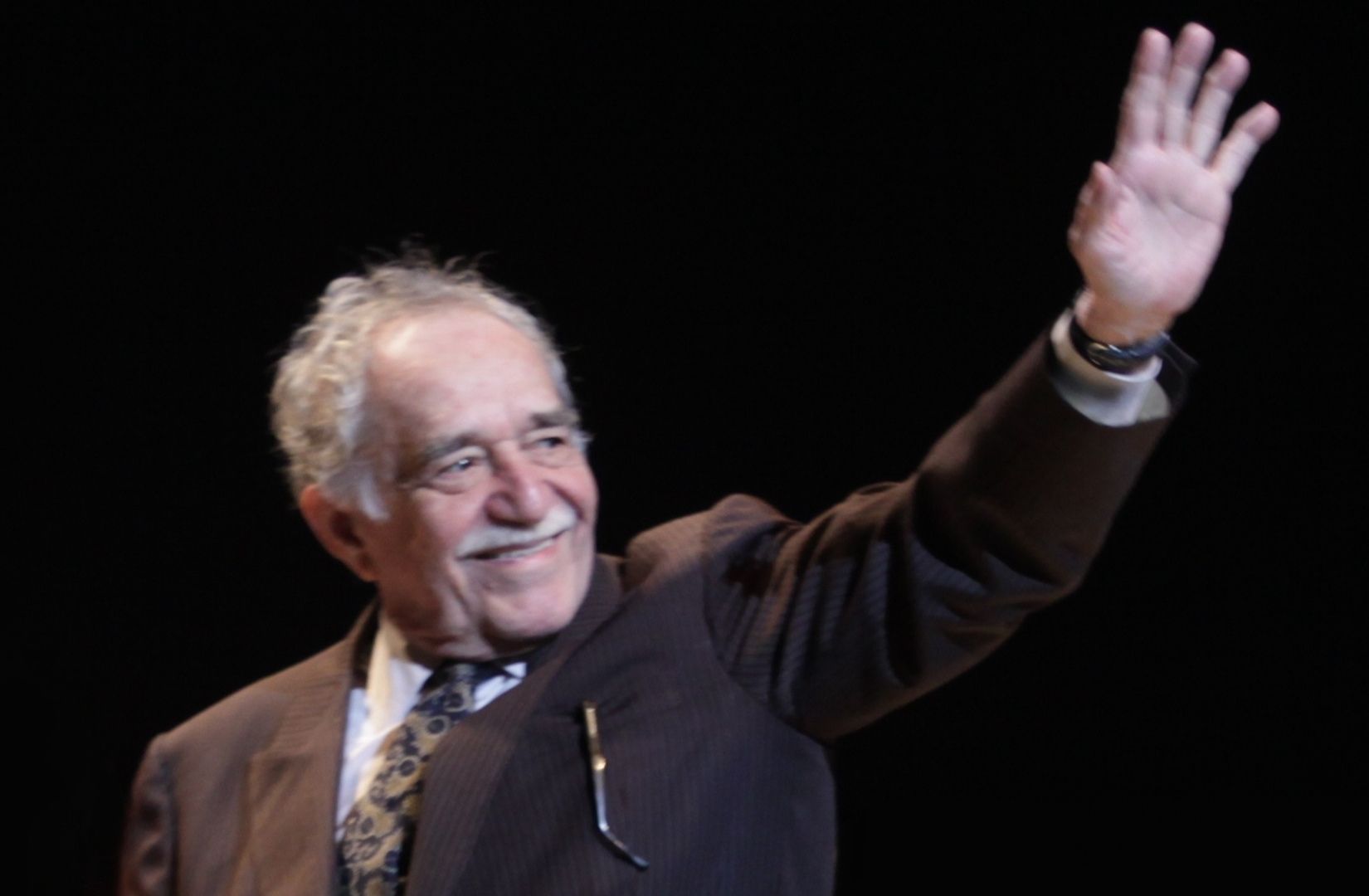
Featured Image Caption: Gabriel García Márquez waving to a crowd in 2009. Photo courtesy of Wikimedia

You must be logged in to post a comment.