
Written by: Lyhan Maldonado
There really isn’t much to say about Slint. Formed in 1986, (surprisingly) out of Louisville,
Kentucky, the members of the band had already been involved in the local punk scene, and
after considering the size of their hometown, it isn’t shocking to know they would later spend
hours in their parents’ basement playing songs that would change the 90s alternative rock
scene.
If you’ve known, or ever heard about the band, then it’ll be obvious that they’re acclaimed
for their sophomore album, Spiderland, released in 1991, recorded in 1990. From obscurity, it
naturally grew by word of mouth to become one of the quintessential albums of its decade.
With odd time signatures, spoken word poetic narratives, and interplay between the quiet and
loud, Slint gained a cult influence in post-rock, math rock, post-hardcore and experimental
rock; though these labels to this day aren’t enough to pinpoint its genius.
Unfortunately, there isn’t much else after or before this landmark. Two albums, an EP, 17
songs, and 81 total minutes of music. There are artists who have had careers spanning
decades, with multiple releases lapping Slint’s discography. So, when the “Good Morning,
Captain” final scream captures your heart, it is natural to want more and intuitively go
towards Tweez, only to find something else.
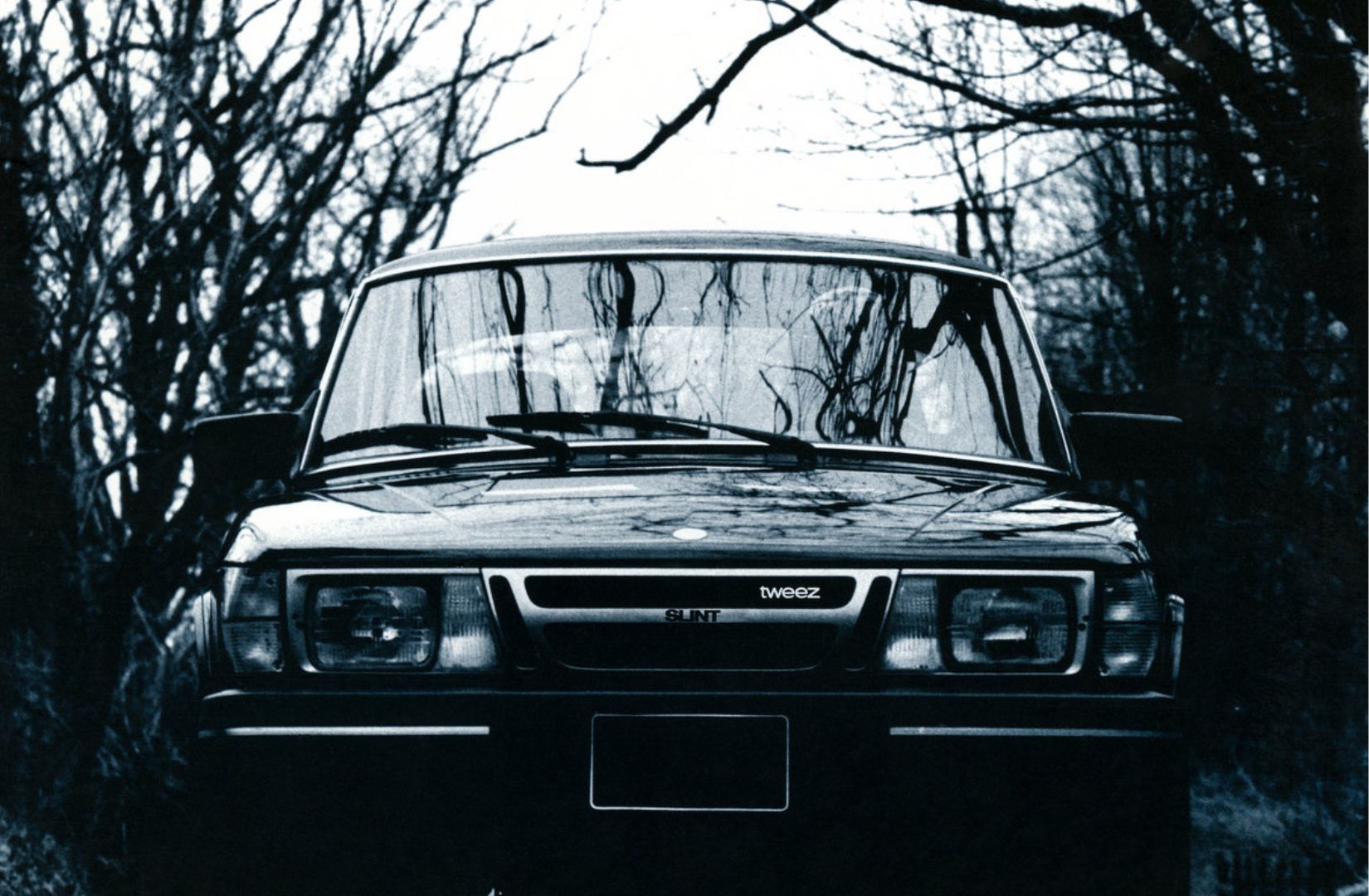
Released in 1989 and recorded in 1987, Tweez is Slint’s strange debut. Produced by the late
legendary musician and producer Steve Albini, the album is entirely on the opposite side of
Spiderland in almost every aspect. Nowhere to be found are the structured narratives, patient
songs or barebones instrumentals. Instead, you’ll find the hissing of a spray paint can, the
sound of gulps of water, complaints to Albini (Credited as “Some Fuckin Derd Niffer”), and
minimal inconsequential lyrics, such as “Tweezer fetish.” Multiple tracks don’t even reach
the 2-min mark, and those who do are rather meandering unfinished sketches with abrupt
stops. The 6th song, “Darlene,” seems to be the only one resembling the spoken word
narrative style the band will later be known for. In it, Brian McMahan reluctantly narrates the
development of a relationship from his outsider view as a mutual friend. The intense drum
fills, the progression of its catchy bassline, and the twangle of a chorused guitar crescendo
into the ending, hauntingly repeating “you know what happened to them?”
“Rhoda,” the final song of the album, would later be rereleased in the Untitled EP, recorded,
in 1989 and later released in 1994, years after the band’s breakup. Compared to its album
version, the EP expands its run time, with the screeching and feedback of guitars revealing
Slint at their noisiest, but also as a band that can jam. Along with “Glenn” in its first half, the
EP serves as evidence of the instrumental developments the band undertook in the middle of
their lifetime. Untitled is a small snack for those who crave more Spiderland, they both carry
that patience Slint has become seminal for, but what about Tweez?
The Breadcrumb Trail documentary, released in 2014, answers the question. With
testimonies from the band, their family, Steve Albini and other musicians such Ian MacKaye
from Minor Threat and Fugazi, we’re reminded that the band were just teens at the time.
During its recording, the oldest member was 19 years old, and the youngest was 17. You can
imagine that these ages aren’t particularly known for serious people, and after the film
reveals the existence of a “Fart tape” within the album, it’s difficult to view the project as
fully fleshed out piece of music.
I love Slint, but I do not like Tweez. After multiple listens over the years, there aren’t many
memorable moments to return to, with the exception of some. The tweethan mix released in
2024 shows the initial vision of their former bassist for the project, but its issues are too
connected to its core to have any substantial change of the listening experience.
Slint hasn’t released anything since 1994, and their last spontaneous reunion was in 2014. So,
as a fan, I’m a little disappointed when listening to their debut, as it feels like scraping the
bottom of a barrel in search of something that will never please. Then again, it is important to
remember that we’re listening to an inside joke, and none of us are in on it.
Featured Image Caption: What about Tweez?
